Hard Data

In 2005 the Texas Legislature created the Texas Workers’ Compensation Research and Evaluation Group (TWCREG) to “collect data and conduct research to evaluate the effectiveness of the workers’ compensation system.” See Texas Labor Code §405.002. Since then, the TWCREG has put out regular reports that are accessible by the public which contains data about the Texas Workers’ Compensation System. This month, the TWCREG published a new report, “Income Benefits in the Texas Workers’ Compensation System” The report sets out its “Key findings” in the chart below. 
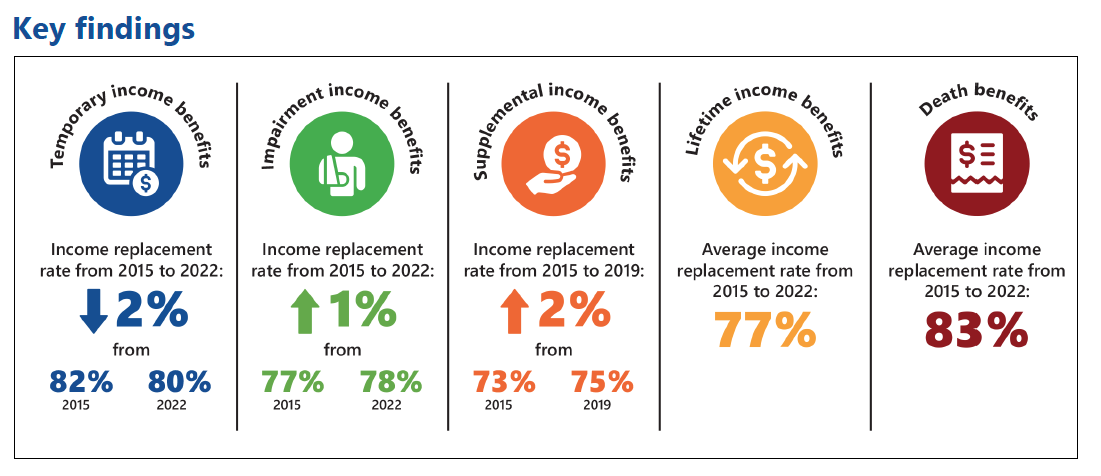
One has to wonder what kind of agenda is being pushed when the report claims that “[a]verage income replacement rate” for Lifetime income benefits increased by 77% and Death benefits by 83% when the data in the report showed no such thing. For instance, Figure 21 on page 25 shows that for Lifetime income benefits, the average income replacement rate fluctuated between 73% in 2015 and 79% in 2022—hardly a 77% increase! 
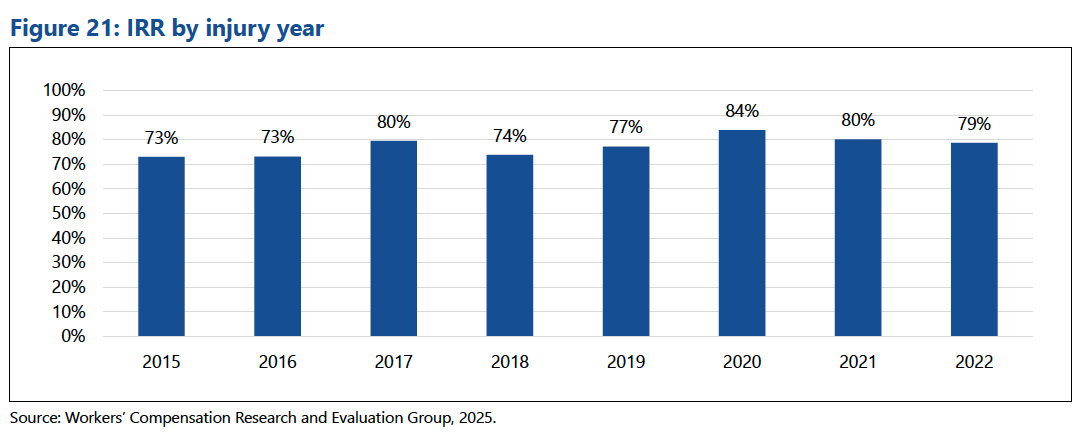
The same fuzzy math is demonstrated in Figure 22 on page 26 where it shows the average income replacement rate for death benefits fluctuated between 83% in 2015 and 86% in 2022. 

But this isn’t the only thing misleading about the report. When looking at the data in the context of the last 25 years, it paints a stark picture of the benefits being paid to Texas’s workers.

Looking Deeper Into the Data

As stated, Texas has been keeping publicly available records on the data within the workers’ compensation for a long time. And periodically, they publish reports on that data in order to report to the Texas Legislature what is going on within the Texas Workers’ Compensation system. In 2018 they produced a Powerpoint titled, “An overview of key trends in the Texas workers’ compensation system–2018.”
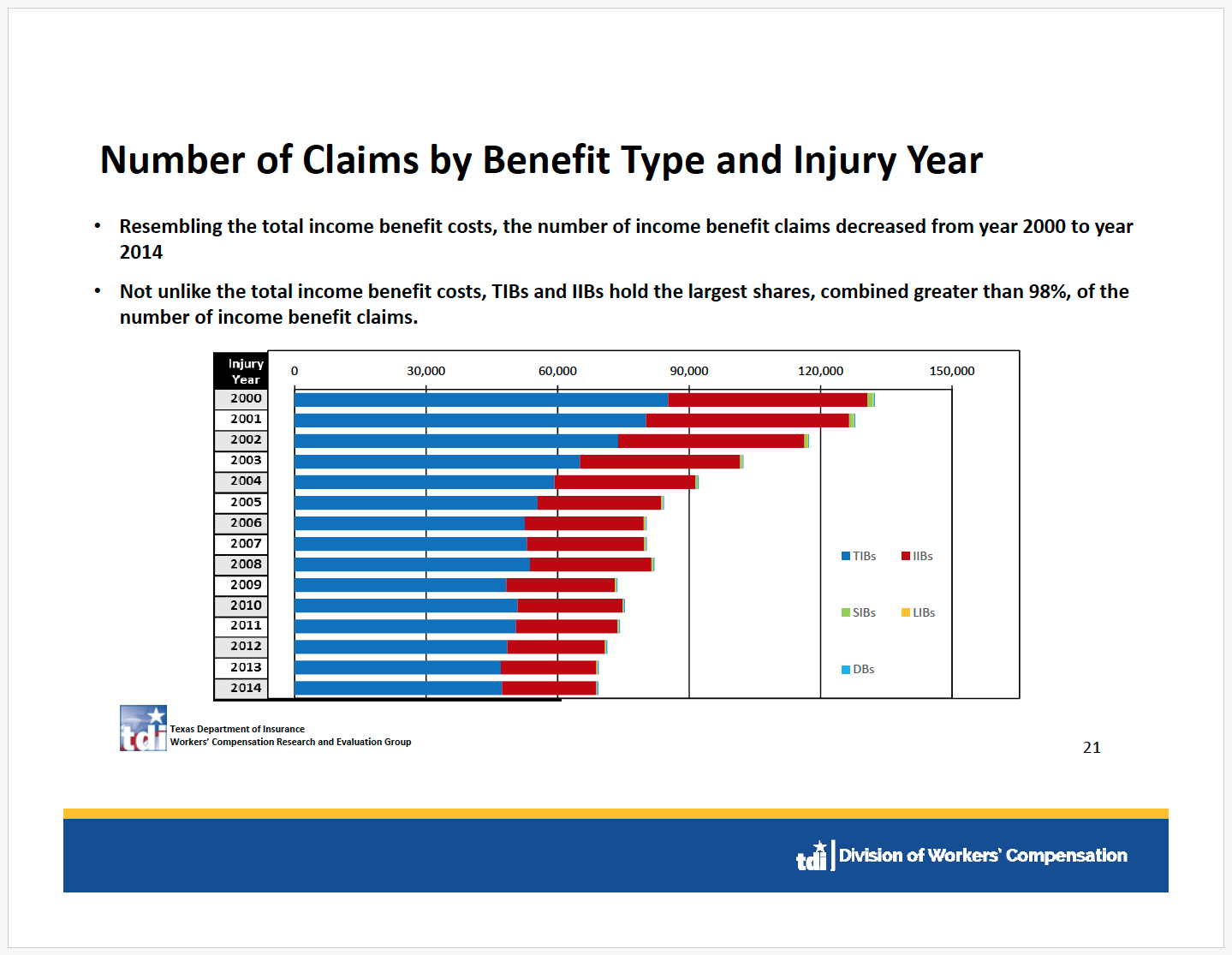
Looking into the data within that report and comparing it to this July’s report gives us some interesting data. For instance, look at the number of claims filed by benefit type and by year. The 2018 report showed the number of claims have decreased since 2000. 
It also shows the amount of money in millions of dollars that Texas workers compensation insurers were paying out in claims each year based upon benefit type. Important to note about this is we are only dealing here with the money being paid to injured workers. This does not include health care costs of which the injured worker gets no economic recovery.

Now let’s compare the data in the slides above with the data published this July.

First off, when we compare the number of claims filed in the 2018 slide with the data from the July report (page 10, Table 2), what we see there was an initial decrease between 2000 and 2008 followed by a leveling off of TIBS claims with a decrease in claims for other kinds of income benefits, particularly IIBS.
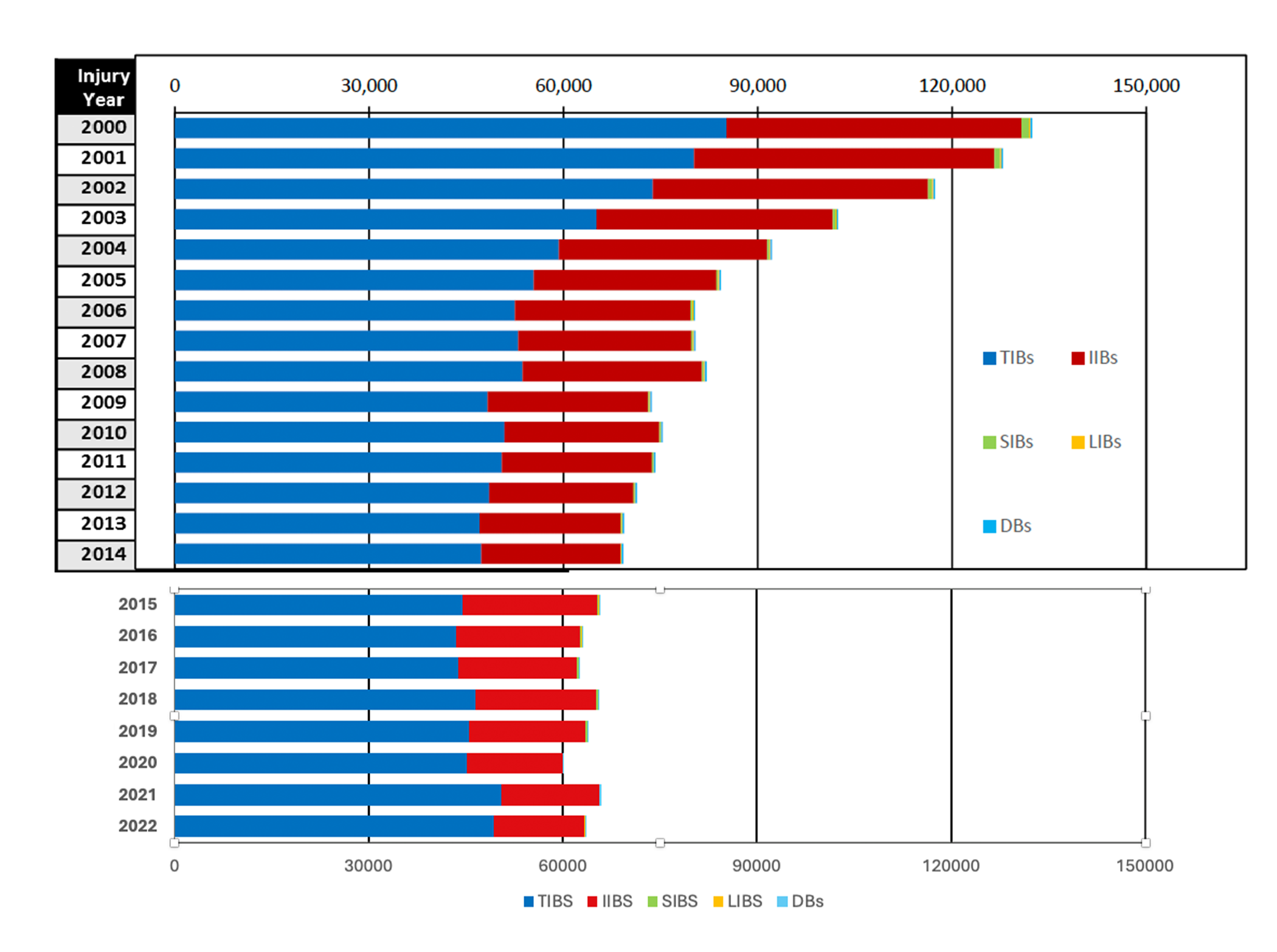
While the decrease in claims filed was dramatic at first, the decrease in numbers slowed but has still continued to trend downwards. The key is, though, that the number of Texans in the workforce has not remained static. According to data published by the federal Bureau of Labor Statistics, the number of Texans in the workforce increased by a whopping 42.7% between 2000 and 2022. So the share of workers filing claims as a percentage of workers in the workforce has had a dramatic decrease, from 1.2% in 2000 to just .43% in 2022!

But that’s not all. Let’s look at the actual figures being paid to injured workers. After all, in the last 25 years we have seen huge improvements in industrial safety, even if much of it has come from machination and automation of industrial production. When we take the data in the July report and we include it in the 2018 chart what we see is that claim expenditures have largely stabilized between $400 million and $600 million dollars a year.
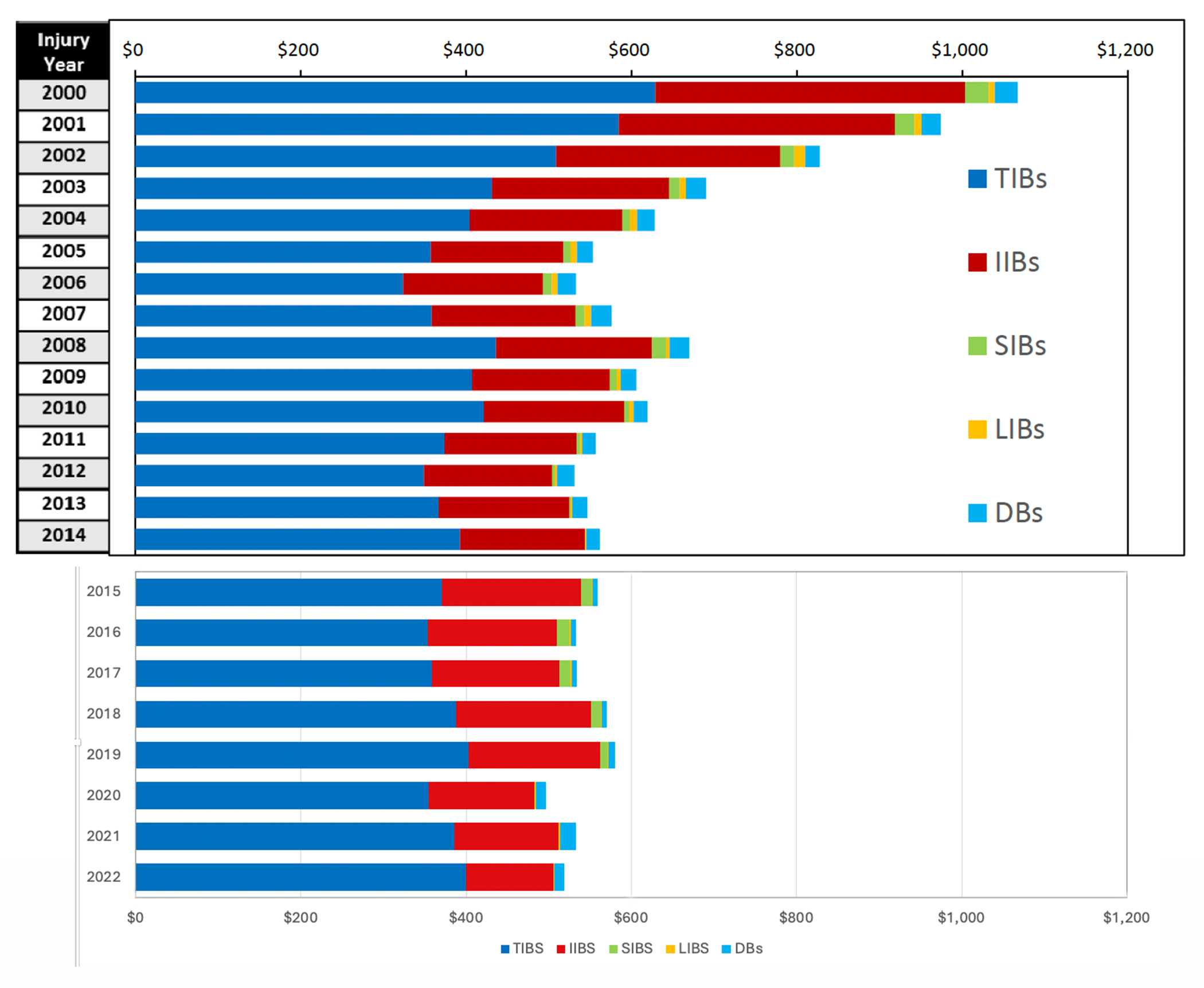
The problem with this data, though, is that it fails to account for the purchasng power of the dollar relative to previous years. For instance, when we adjust the values published in the July report based upon the consumer price index in 2014 we see that the workers compensation costs are continuing to decrease since 2014.
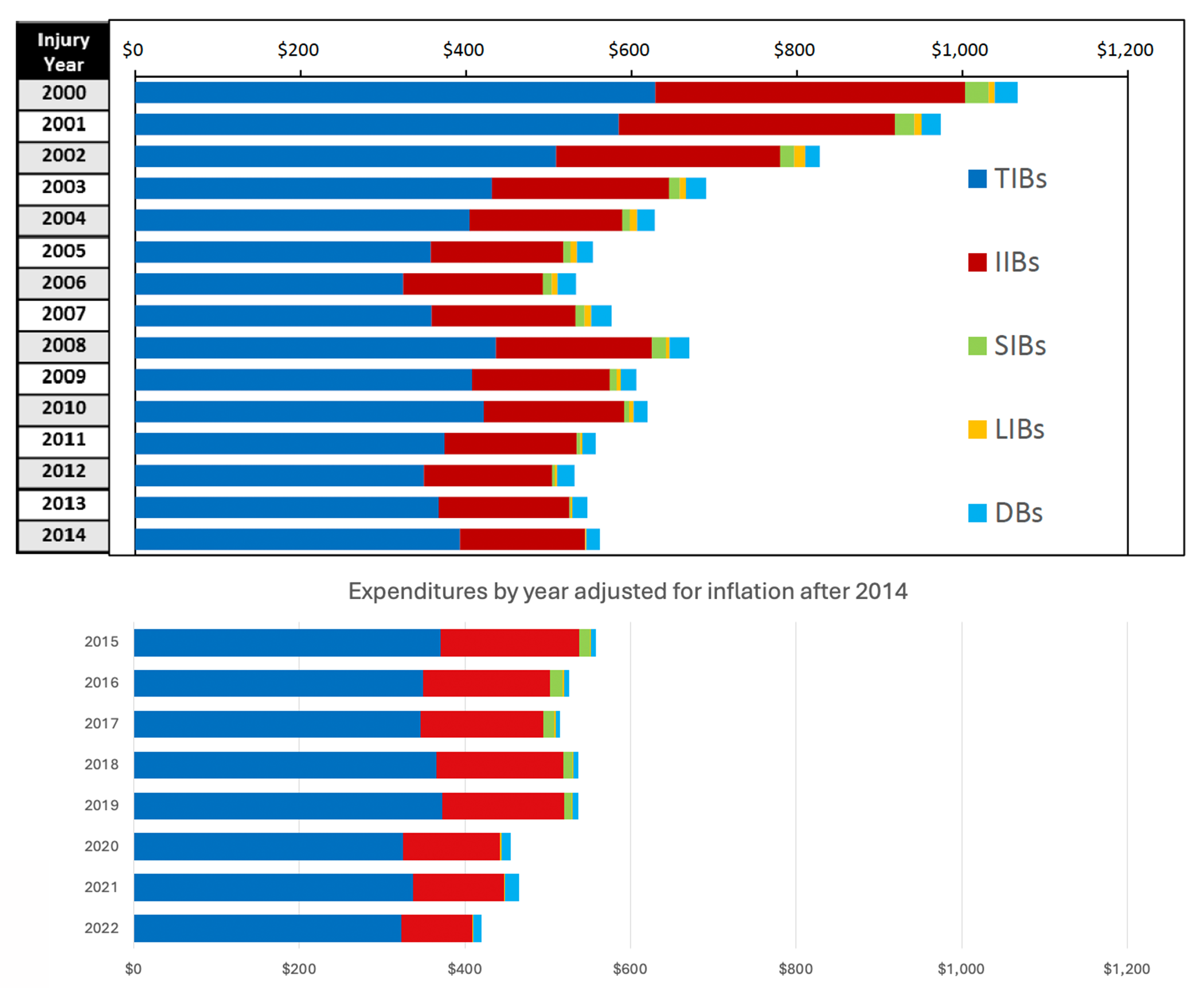
Now the trendline is evident with real costs showing a decrease from close to $600 million dollars in 2015 to an amount that is closer to to $400 million in 2014 dollars. But the thing is, the data from the 2018 slides is not adjusted for inflation, either. Thus, when we compare the July data with the inflation data since 2020, a more perverse picture emerges.
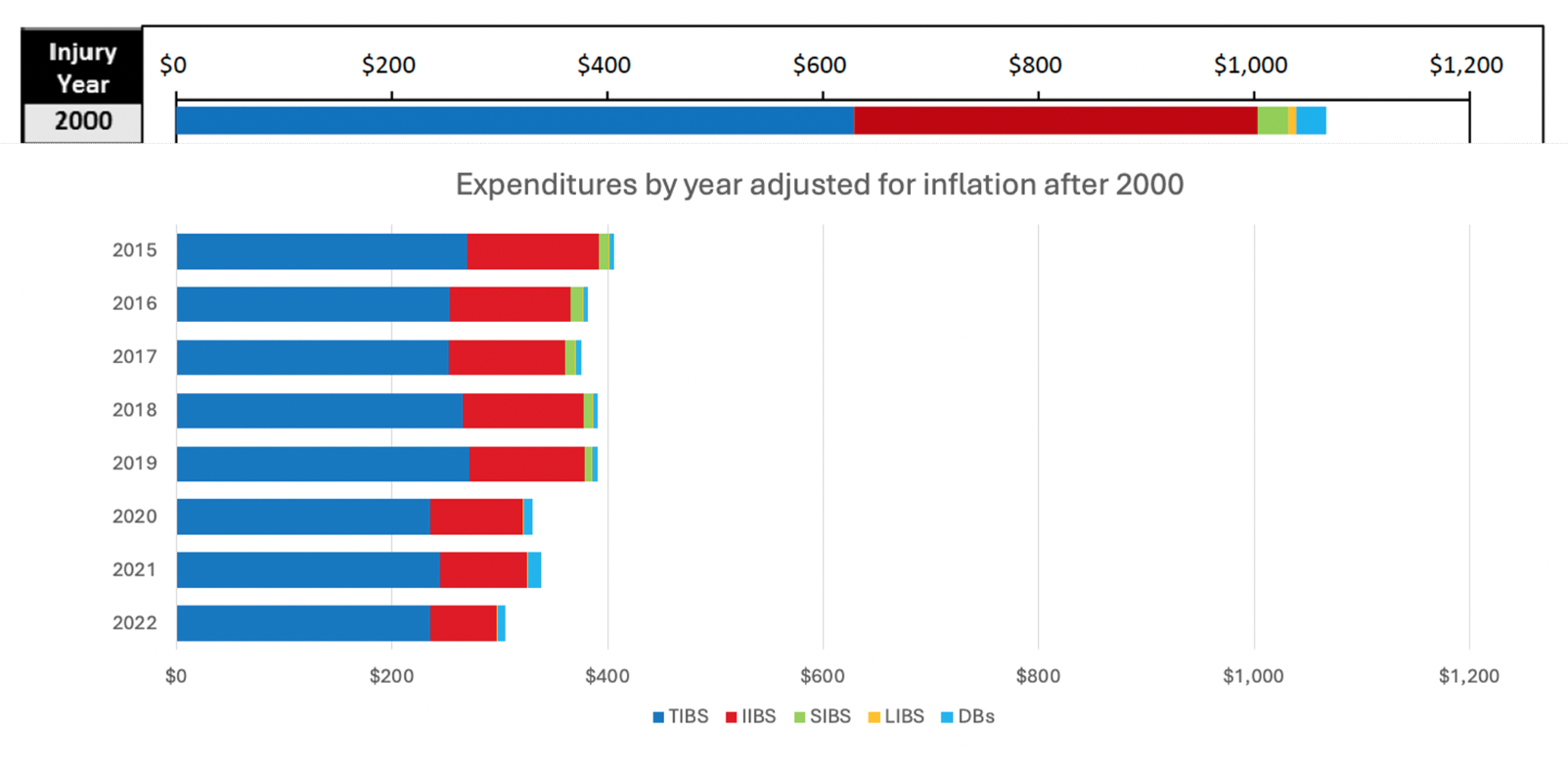
The economic cost to the Texas economy of income benefits paid to injured Texas workers in 2022 is a third what it was in 2000! Keeping in mind that the Texas workers’ compensation system was overhauled due to costs during Governor Ann Richards’ tenure, one can see that Texas workers rarely take income benefits under Texas’ workers compensation system and when they do, those benefits are a shell of what they once were only 20 years ago.

Understanding Off-the-Clock Injuries in Texas Workers’ Compensation Claims

In the realm of workers’ compensation in Texas, distinguishing between on-the-clock and off-the-clock injuries is crucial for determining eligibility for claims. An off-the-clock injury refers to any injury that occurs outside of an employee’s regular work hours or prescribed duties. For workers and employers alike, understanding how these incidents are handled under Texas law can guide decision-making and ensure rights are protected. This blog post aims to shed light on off-the-clock injuries and provide practical advice for workers who might find themselves navigating this complex area.

Are Off-the-Clock Injuries Covered by Workers’ Compensation in Texas?

Generally, workers’ compensation in Texas is designed to cover injuries that occur during the course of employment. This means injuries sustained while a worker is actively engaged in operations directly related to their job functions are typically compensable. However, if the injury happens outside of work hours and does not relate to the worker’s job duties, it usually does not qualify for workers’ compensation benefits.

There are exceptions to this rule. For instance, if an employee is injured while performing tasks they were directed to carry out by their employer, even if these tasks are completed outside of regular work hours, they may still be covered. Additionally, injuries occurring during work-sponsored events, such as company parties or outings, might also be eligible for coverage if they can be directly related to employment.

It’s important for workers to understand the specifics of these exceptions and consider whether their situation might actually fall under the purview of compensable work-related injuries, despite occurring off-the-clock.

Evaluating Your Case: Steps to Take After an Off-the-Clock Injury

If you’ve suffered an injury outside of work hours and believe it might be related to your job, taking the right steps immediately after the incident can be crucial for protecting your potential workers’ compensation claim. Consider the following actions:

1. Seek Medical Attention: Prioritize your health above all else. Even if you believe the injury is minor, a thorough medical evaluation is essential. Medical records will also play a vital role in any potential workers’ compensation claim.

2. Document Everything: Keep detailed records of the circumstances surrounding the injury. Note the times, locations, and any relevant activities or interactions with others. If possible, collect statements or contact information from witnesses.

3. Notify Your Employer: Inform your employer about the injury as soon as possible, even if it occurred off the clock. Providing your employer with timely notice is critical and is a statutory requirement in Texas workers’ compensation claims.

4. Consult with a Workers’ Compensation Attorney: Because off-the-clock injuries can fall into a legally gray area, consulting with an attorney who specializes in workers’ compensation Texas law can provide you with guidance tailored to your specific situation.

An attorney can help determine whether your off-the-clock injury might be compensable under Texas law and assist in navigating the claim process. Seeking professional legal advice early can make a significant difference in the outcome of your case.

Proving Work-Relatedness of Off-the-Clock Injuries

One of the biggest challenges in claims involving off-the-clock injuries is proving that the injury is work-related. This often involves demonstrating that the activities during which the injury occurred were implicitly or explicitly sanctioned by the employer and connected to the worker’s job duties.

Compiling evidence is key. This can include emails, texts, or other communications from employers requesting off-the-clock work, testimonies from colleagues, or any contractual documents that outline expected duties, some of which may occur outside regular business hours.

Furthermore, it’s beneficial to understand the nuances of state-specific laws. Texas workers’ compensation law places a significant emphasis on the idea of “course and scope of employment.” Being familiar with how these legal standards are applied can help you and your attorney argue your case more effectively.

Remember, each case is unique, and the compensability of off-the-clock injuries can vary greatly depending on the specifics involved. Thus, getting personalized advice from a lawyer is invaluable.

This article is for informational purposes only and does not constitute legal advice. If you’ve been injured at work in Texas, consult with an attorney to understand your rights.

In a memorandum opinion today, the Amarillo Court of Appeals ruled in favor of a woman who lost her son in a tragic on-the-job injury. The case, Texas Mutual Insurance Company vs. Rosa Mendez, Case Number 07-19-00087-CV, involved a worker at a plant that made sand used in fracking. The mechanism that transported product into a large, industrial blender was broken and the injured worker and another coworker were ordered to climb up, fifteen feet above ground level, to the top of the blender and pull product off of a forklift that had lifted the product to the top of the blender. The area at the top of the blender just had cylindrical bars guarding the mouth of the blender instead of any grating that would prevent a human from going into the machine. The worker’s foot slipped as he used it for leverage to pull the sack of product into the blender and, tragically, the worker was pulled into the blender and killed. He was survived by only his parents who filed a workers’ compensation claim as dependent beneficiaries. The insurance company, Texas Mutual, disputed the claim on grounds that an autopsy report revealed the presence of THC or marijuana metabolites in the worker’s blood. The Texas Department of Insurance, Division of Workers’ Compensation ruled in favor of Texas Mutual and the parents appealed into district court. Sadly, while the case was pending trial, the father of the worker died of a long-endured illness. A Lubbock County jury ruled in favor of Ms. Mendez, that her son did not die while in a state of intoxication and Texas Mutual appealed the case to the Amarillo Court of Appeals.

The Amarillo Court of Appeals rejected Texas Mutual’s challenge to the sufficiency of the evidence of the worker’s sobriety. Although there was much more evidence than that cited in the opinion, the Amarillo Court focused on the trial testimony of a coworker who testified that the decedent had the normal use of his mental and physical faculties at the time of the injury.

The Court of Appeals remanded the case back to the district court to address attorney fees. Although the evidence in the case showed that Mr. Gibson took the case on a contingency fee, and, because Ms. Mendez’ benefits are limited to 364 weeks, Mr. Gibson’s fee was limited to only one-third the value of what he would have been paid had he been able to collect his full hourly fee for the time spent on the case–and half of what Mr. Gibson billed in his fee went to pay case expenses and expert witness fees–the Court remanded the case to require Mr. Gibson to produce billing statements upon which the trial court could assess the contingency fee.

In the wake of 9/11, the Texas Legislature took steps to recognize the difficulties firefighters and emergency medical technicians have in proving work-related cancer. As a result, the Texas Legislature passed what is known as the “Cancer Presumption” or Section 607.055 of the Texas Government Code, which states that if a firefighter or EMT suffers from cancer resulting in death or partial disability, that cancer is presumed to be in the course and scope of employment if:

  1.  The firefighter or EMT:
    • regularly responded on the scene to calls involving fires or fire fighting; or
    • regularly responded to an event involving the documented release of radiation or a known or suspected carcinogen while the person was employed as a firefighter or EMT; and
  2. the cancer is known to be associated with fire fighting or exposure to heat, smoke, radiation, or a known or suspected carcinogen as determined by the International Agency for Research on Cancer (IARC).

The following cancers are cancers that are known to be associated with fire fighting or exposure to heat, smoke, radiation or a known or suspected carcinogen, that we know of at this time:

  • Espophagus
  • Stomach
  • Colorectum
  • Caecum
  • Pancreas
  • Lung & Bronchus
  • Melanoma
  • Prostate
  • Testis
  • Bladder
  • Kidney & Renal
  • Pelvis
  • Brain
  • Thyroid
  • Leukemia
  • Non-Hodgkin Lymphoma
  • Multiple Myeloma

The rationale for this law should be obvious. Firefighters and EMTs at the scene of a fire are exposed do all manner of carcinogens in the air. It is taken as a badge of honor amongst firefighters to come back from a fire covered in soot and grime. But this same soot and grime gets into the body through the pores in the skin and through the lungs in the air that is breathed. It would be next to impossible for a firefighter to pinpoint exactly what exposure, on what specific day, led to the development of cancer. That is an impossible evidentiary hurdle to cross. So, instead, when a firefighter or EMT develops cancer, if it is one of these cancers–or even a similar cancer that may be related to one of these cancers–then it is presumed to have occurred on the job and it is the burden of the insurance company to prove it did not occur on the job.

As can be expected, insurance companies have cried fowl over this legislation. They pay their doctors to distort the medical findings. They claim the law is unconstitutional. When all else fails, they attack the substance of the claim under the legal guidelines. For instance, “regularly responded” has not yet been defined. So, fire fighting departments are now under strict orders to keep statistics on calls. Insurance companies will claim that “regularly responded” means responding to actual fires on most of the calls and not car wrecks or downed power lines or the many other types of calls to which firefighters are regularly called. They will also dig through the complete medical history of the firefighter. Was there a history of tobacco use? Was there a family risk factor?

The bottom line is, these cases are exceedingly complex. Even with the presumption, they are no slam dunk for the firefighter. The Texas Legislature is to applauded for taking the steps to protect fire fighters and EMTs access to workers compensation benefits. However, more work remains. Ordinarily, an insurance company that loses at the Division of Workers’ Compensation, must pay the claimant’s attorney fees if the case is appealed into district court and the insurance company loses there, as well. However, this does not apply to claims involving governmental entities. So, if the insurance company loses at the Division of Workers’ Compensation, they simply appeal into District Court by suing the cancer-stricken claimant or that person’s survivors. Then, to add insult to injury, the claimant or survivors must pay even more in attorney fees to keep what was already won at the Division. The Texas Legislature needs to add a provision to the Labor Code which forces governmental entities to pay their share of the attorney fees just like every one else. Only then, will we see cities and counties do the right thing and take full responsibility for their first responders.

Take a look at this link from Houston’s ABC affiliate, KTRK’s investigative report. A police officer shot in the line of duty and years later he cannot get medical care. It is sensational because it is a police officer who is fighting to get medical care approved but his experience is no different than workers in any other field. The Texas Workers Compensation system was passed by a legislature that promised lifetime medical care but as anyone who has ever dealt with workers compensation in Texas knows, lifetime medical care is a farce. The Insurance industry is simply not set up to provide lifetime medical care to claimants.

courtesy of KTRK TV

Continue Reading Lifetime Medical Coverage is a Sham

I got drug tested after I got hurt and tested positive. What do I do now?

If you test positive for drugs or alcohol after getting hurt at work, the insurance company does not have to pay you any worker’s compensation benefits. You have to prove that you were sober at the time of your injury. You have to prove that you had, in legal terms, the normal use of your mental and physical faculties at the time that you got hurt.

One way you do it is by getting witness statements. You’ll have to get coworkers to write statements or they will agree to appear for you at a hearing and testify you were sober at the time you were injured. You’ll have to have some type of a drug or alcohol expert testify as whether or not that was a legitimate drug test and whether or not the numbers truly reflected whether or not you were impaired at the time of the injury. Those types of cases are cases that are highly specialized. You do not want to handle one of those types of cases alone.

You need to talk to a lawyer immediately if you get a letter from the insurance company saying they’ve denied your claim because you tested positive for any type of illegal substance.

How does workers comp affect my health insurance?

When you’re injured on the job and your employer provides health insurance, oftentimes people are worried what happens if I lose my job, how’s that going to affect my health insurance? If you’re injured on the job and your employer provides health insurance and you’re worried about losing your job, your employer has to continue paying for your health insurance premiums.

If your employer decides to quit paying your health insurance, then your employer has to give you notice of that. They have to increase the amount of worker’s comp benefits they pay you, such that you then are allowed to pay your health insurance premiums privately out of the increase of worker’s comp benefits that you get. One of the things that happens though is, no one tells you that they’ve cut off your health insurance.

That’s why it’s important to have a lawyer because one of the things that we do is we audit that and we make sure that you do get every single last dime you’re entitled to, so that way you can pay those health insurance premiums if they cut off your health insurance.

I was in a car wreck while on the job. Is it better to have a workers comp lawyer handle everything?

When someone’s in a car wreck, that happens while they’re also working on the job, one of the things they’re concerned about is, do I need to get two lawyers? One lawyer to handle the car wreck and one lawyer to handle the worker’s comp part of the case. When you have a lawyer who knows how to do both car wrecks and workers comp, then that lawyer has the skills in both areas in order to handle the case properly, and that’s important because those cases will overlap.

There are important legal concepts with workers comp that can affect the outcome of that personal injury case, and they’re important concepts with a personal injury case that can affect the workers comp case. If you have a case that involves some outside third party, and it’s always important to get a lawyer who is knowledgeable and experienced and skilled in both areas.

We have done a large amount of cases that involve both this third-party type, as well as workers compensation, so I’m one of those people who is knowledgeable and skilled in both areas.

What happens if I find a new job while on workers comp?

In the state of Texas, they put a very, very high premium on people getting back to work as soon as possible. We have seen that when people return back to work as soon as possible, they actually have increased outcomes on workers comp and in our office, we certainly want you to have the best outcome possible and we want you to return to work as soon as possible. If your employer that you were working for when you’re injured no longer has a job for you, you’re free to go out and get another job.

However, you want to make sure that that job is one that is consistent with your restrictions that you might be on. You want to make sure that, that job is one that you can do, but if you do get offered a job that is within your restrictions and it’s one that you can do certainly you want to take advantage of that opportunity but when you do, you also need to let your attorney know and you also want to make sure that the insurance company knows about it. But certainly you want to go out and find a job if you can, you want to work that helps you get actually a better outcome on your workers’ comp when you return to workers as soon as you can.